
IP Litigation Update
Current AI Usage Rules in the Most Popular Patent Infringement Case Venues

All patent litigation practitioners know the critical importance of familiarity with a forum’s local patent rules as well as any judge-specific patent rules. A failure to understand those rules can result in significant consequences. As generative AI is used more frequently in patent infringement cases, practitioners also must know and abide by each court’s rules regarding generative AI usage. This Update summarizes the current generative AI-specific rules in the most popular venues for patent litigation: the Eastern and Western Districts of Texas, the Central and Northern Districts of California, the Northern District of Illinois, the District of Delaware, the District of New Jersey, and the U.S. International Trade Commission. Practitioners must, of course, stay abreast of future changes to these requirements.
Eastern District of Texas
On October 31, 2025, the Eastern District of Texas amended its local Rule CV-11, effective December 1, 2025, to clarify that all litigants, not just pro se litigants, are responsible for the “accuracy and quality of legal documents produced with the assistance of generative artificial intelligence technology” and must review and verify all content to ensure it complies with the requirements of Fed. R. Civ. P. 11.1 Previously, the Eastern District of Texas required only that pro se litigants verify any computer-generated content.
Magistrate Judge John D. Love goes one step further than the districtwide rule and requires that all filings submitted to his court include a “Certificate of Generative Artificial Intelligence Usage” that “discloses: (1) ‘generative artificial intelligence’ was used (or not used); (2) the specific tool the party used; (3) how the party used the tool in preparing the relevant document;” and (4) certification that the party has “checked the accuracy of any portion of the document drafted or assisted by the tool, including all factual and procedural background, citations, and legal authority.”2 Judge Love further states that “[t]he court presumes that a party who files a document that does not contain this certification certifies that no part of the document was prepared using generative artificial intelligence.”3
On July 20, 2026, Judge Marcia A. Crone issued an order that also goes beyond the Eastern District of Texas districtwide rule. Judge Crone further requires that “[i]f a party utilizes AI to draft or assist in drafting a pleading, the party must include with the pleading a ‘Certificate of Generative Artificial Intelligence Usage.’ The certificate must disclose the use of AI and certify that the party has independently verified the accuracy of any portion of the document drafted or assisted by the tool. The party must further certify that the use of AI has not resulted in the disclosure of confidential or privileged information to an unauthorized party.”4
Western District of Texas
Currently, the Western District of Texas does not have any districtwide AI disclosure rules. Until recently, it also did not have any judge-specific AI disclosure rules. However, on June 25, 2026, Judge Ernest Gonzalez issued a new standing order regarding the use of artificial intelligence: “If counsel utilizes generative artificial intelligence to draft or assist in drafting a pleading,” the filing will need to include a certification explaining which tool was used and certifying that the attorney has “independently verified the accuracy of the legal and factual assertions contained in this document” and that “the use of generative artificial intelligence has not resulted in the disclosure of any confidential or privileged information to any unauthorized party.”5
Northern District of California
The Northern District of California does not have a districtwide rule. However, some Northern District judges have their own rules. Magistrate Judge Peter H. Kang requires that “[a]ny brief, pleading, or other document submitted to the Court the text of which was created or drafted with any use of an AI tool shall be identified as such in its title or pleading caption, in a table preceding the body text of such brief or pleading, or by a separate Notice filed contemporaneously with the brief, pleading, or document. Counsel shall maintain records sufficient to identify, if requested by the Court, those portions of the text of a pleading, brief, or document submitted to the Court which was created or drafted by an AI tool.”6 Magistrate Judge Kang also requires the parties to “raise any [generative] AI-related issues in their Joint Case Management Conference and Pretrial Statements” and sets forth rules for procedures to be followed “with regard to proffering evidence, documents, or other factual material which that Party or counsel knows or has any reasonable basis to believe is or was created in whole by a generative AI or any AI tool for creating text, documents, images, video, graphics, audio, or any other material.”7
Judge Eumi K. Lee and Judge Araceli Martínez-Olguín require that lead trial counsel certify that he or she “has personally verified the content’s accuracy” for “[a]ny submission containing AI-generated content.”8 Moreover, both require that counsel “maintain[] records of all prompts or inquiries submitted to any generative AI tools in the event those records become relevant at any point.”9
Other Northern District of California judges do not require a separate AI-related certification but instead remind counsel of their Rule 11 obligations. For example, Judge Trina L. Thompson’s Standing Order on Civility and Professionalism and Judge Rita Lin’s May 2026 standing order remind attorneys that while use of generative artificial intelligence tools is not prohibited, “counsel must personally confirm for themselves the accuracy of any research conducted by these means, and counsel alone bears ethical responsibility for all statements made in filings.”10 Judge Thompson further requires that “[a]ny billing statements submitted for review of the Court must indicate AI usage when applicable.”11 Similarly, Magistrate Judge Lisa J. Cisneros’s February 17, 2026 Standing Order reminds attorneys that they “must understand the limitations of any tools that they use, and they remain fully responsible for the final products they submit to the Court. The Court will impute any errors by computer-based tools to the attorney or unrepresented party whose signature appears on the document containing those errors. Failure to verify the accuracy of briefs, and particularly the accuracy of citations to law and evidence, may be grounds for sanctions and/or striking a filing.”12 And Magistrate Judge Susan van Keulen’s February 2, 2026 Standing Order states, “[t]he signature of counsel or a self-represented party on any submission containing AI-generated content, including citations generated by AI, constitutes a certification that the signing attorney (or self-represented party) has personally verified the content’s accuracy. The Court will impute any errors by such AI tools to the attorney or party whose signature appears on the document containing those errors.”13
Central District of California
The Central District of California also does not have a districtwide rule. However, as with the Northern District, some judges have their own rules. For example, Judge Stanley Blumenfeld Jr., Judge Kenly Kiya Kato, Judge Anne Hwang, Judge Fred W. Slaughter, Judge Josephine L. Staton, Magistrate Judge Alka Sagar, and Magistrate Judge Rozella A. Oliver require that any party who uses generative artificial intelligence “to generate any portion of a brief, pleading, or other filing must attach to the filing a separate declaration disclosing the use of artificial intelligence and certifying that the filer has reviewed the source material and verified that the artificially generated content is accurate and complies with the filer’s Rule 11 obligations.”14
Judge Kato further explains that “Non-compliance and/or citations to non-existent or inaccurate sources will result in sanctions of $500 for an initial violation and $500 for each subsequent violation.”15 Similarly, Judge John F. Walter requires that “if any attorney for a party or a pro se party has used any generative artificial intelligence (‘AI’) in the preparation of any complaint, answer, motion, brief, or other document filed with the Court, the attorney or pro se party shall disclose that AI has been used in the preparation of the document, and CERTIFY that the attorney or pro se party has personally reviewed and verified the accuracy of all legal citations, quotations, factual statements, and analyses contained in the document.”16 Judge Walter cautions that “[f]ailure to include such certification will result in the striking of the document.”17
Judge Otto D. Wright II goes a step further and requires specified briefs to include a certification stating whether generative artificial intelligence was used. If it was, the filer must certify that he or she “reviewed, revised, and supplemented all portions of the brief, including those that were informed by the use of Artificial Intelligence or based on prior templates. I independently verified the factual and legal accuracy of the content and confirmed that all arguments and authorities were appropriate to the issues presented.”18
Judge Fernando M. Olguin does not require submitting a separate declaration to the court, but his Initial Standing Order states that “[i]f any party or attorney uses an artificial intelligence tool in the preparation of any filing, the submission of that document signifies that the individual responsible for the filing has certified that she/he reviewed all source material and verified the accuracy of any AI content.”19 Similarly, Magistrate Judge Karen E. Scott’s procedures state that “[c]ounsel are hereby put on notice that AI tools used to draft legal briefs can make mistakes (sometimes called ‘hallucinations’), including citing non-existent legal authorities. As part of counsel’s duties under Federal Rule of Civil Procedure 11, anyone who signs a brief or other court filing that was created, in whole or in part, using AI, certifies to the Court that they have checked and verified the accuracy of the cited legal authorities.”20 And Magistrate Judge Anna Y. Park merely reminds attorneys of their Rule 11 obligations: “Artificial Intelligence: Counsel and parties are reminded of their obligations under Federal Rule of Civil Procedure 11 and the representations to the Court that are made by signing a paper filing with the Court.”21
Northern District of Illinois
The Northern District of Illinois does not have a districtwide rule. However, some judges have their own rules. For example, Judge Iain D. Johnston’s Case Procedures states, “Anyone — counsel and unrepresented parties alike — using AI in connection with the filing of a pleading, motion, or paper in this Court or the serving/delivering of a request, response, or objection to discovery must comply with Rule 11(b) and Rule 26(g) of the Federal Rules of Civil Procedure, and any other relevant rule, including any applicable ethical rule.”22 Judge Sharon Johnson Coleman’s Memorandum of Law Requirements similarly states that “[a]ny party — counsel and unrepresented parties alike — using Artificial Intelligence (‘AI’) in connection with the filing of a pleading, motion, or memorandum of law in this Court must comply with Rule 11(b) and Rule 26(g) of the Federal Rules of Civil Procedure. The court prohibits the use [of] AI-generated legal research containing false or inaccurate propositions or citing non-existent cases.”23 Likewise, Magistrate Judge Gabriel A. Fuentes states that “[t]he Court expects that no counsel will submit hallucinated authorities, and that all counsel will follow Rule 11 of the Federal Rules of Civil Procedure. … The Court will continue to presume that the preexisting Rule 11 certification is a representation by filers, as living, breathing, thinking human beings, that they themselves have read and analyzed all cited authorities to ensure that such authorities actually exist and that the filings comply with Rule 11(b)(2).”24 And Magistrate Judge Maria Valdez states, “All pleadings and other papers filed with the Court must conform with Federal Rules of Civil Procedure 8, 11, and/or 26(g). Any violations of those rules including, but not limited to, the misuse of artificial intelligence, may result in sanctions.”25
District of Delaware
As of September 8, 2026, we have identified no districtwide or judge-specific AI disclosure rules in the District of Delaware. However, that could change at any time.
District of New Jersey
The District of New Jersey does not have a districtwide rule. However, some judges have their own rules. Magistrate Judge Justin T. Quinn requires that “[a]ny party or counsel that uses generative artificial intelligence (excluding Westlaw and LexisNexis) in any filing either addressed to or to be decided by Judge Quinn shall file a certification with that document, stating that all legal and factual citations in the document(s) have been checked for accuracy.”26 Judge Evelyn Padin similarly requires “a mandatory certification that the GAI [Generative Artificial Intelligence] work product was diligently reviewed by a human being for accuracy and applicability.”27 Judge Padin further explains that “[a] failure to comply with this requirement may result in sanctions, such as the filing being stricken, and/or a referral to a bar disciplinary committee.”28
U.S. International Trade Commission
As of September 8, 2026 we have identified no Commission-wide or administrative law judge–specific generative-AI disclosure requirement applicable to Section 337 filings. However, that could change at any time.
* * *
Local and judge-specific AI rules continue to evolve rapidly. We will continue to monitor developments in the most popular patent infringement case venues and adjust this Update periodically.
1https://txed.uscourts.gov/sites/default/files/goFiles/GO%2025-07%20Amending%20Local%20Rules.pdf; see also https://www.txed.uscourts.gov/sites/default/files/HR_Docs/TXED%20Local%20Rules%202025%20-%20As%20Amended%202.9.2026%20Updated%206.2.2026.pdf at 17-18 (Local Rule CV-11(g)), 42 (LOCAL RULE AT-3(m) setting forth AI-related “Standards of Practice to be Observed by Attorneys”).
6 https://cand.uscourts.gov/sites/default/files/standing-orders/PHK-Civil-Standing-Order_2025.7.16.pdf at 9-10.
7 https://cand.uscourts.gov/sites/default/files/standing-orders/PHK-Civil-Standing-Order_2025.7.16.pdf at 4, 10-11.
8 https://cand.uscourts.gov/sites/default/files/standing-orders/EKL-CivilStandingOrder-8-28-2025.pdf at 10; https://cand.uscourts.gov/sites/default/files/standing-orders/AMO-CivilStandingOrder-8-26-2026.pdf at 6.
9 https://cand.uscourts.gov/sites/default/files/standing-orders/EKL-CivilStandingOrder-8-28-2025.pdf at 10; https://cand.uscourts.gov/sites/default/files/standing-orders/AMO-CivilStandingOrder-8-26-2026.pdf at 6.
10 https://cand.uscourts.gov/sites/default/files/standing-orders/TLT-Civility-and-Professionalism-Standing-Order.pdf at 4; https://cand.uscourts.gov/sites/default/files/standing-orders/RFL-CivilStandingOrder-5-7-2026.pdf at 7.
11 https://cand.uscourts.gov/sites/default/files/standing-orders/TLT-Civility-and-Professionalism-Standing-Order.pdfat 4.
12 https://cand.uscourts.gov/sites/default/files/standing-orders/LJC-CivilStandingOrder_2-17-26.pdf at 3-4.
14 https://apps.cacd.uscourts.gov/JpsApi/file/1d8b41e3-d7f3-46ab-7d6f-08df0dfe0103 at 7; https://apps.cacd.uscourts.gov/JpsApi/file/26c7e990-34b1-41f3-4d99-08dedec318afat 6; https://apps.cacd.uscourts.gov/JpsApi/file/d722706b-9e07-4f2d-d1c5-08de5387c55f at 6; https://apps.cacd.uscourts.gov/JpsApi/file/bbd27d32-7593-4457-9e6f-08def326596c at 5; https://apps.cacd.uscourts.gov/Jps/honorable-josephine-l-staton; https://apps.cacd.uscourts.gov/Jps/honorable-alka-sagar; https://apps.cacd.uscourts.gov/Jps/honorable-rozella-a-oliver (typo corrected).
15 https://apps.cacd.uscourts.gov/JpsApi/file/bbd27d32-7593-4457-9e6f-08def326596c at 5.
16 https://apps.cacd.uscourts.gov/Jps/honorable-john-f-walter.
17 https://apps.cacd.uscourts.gov/Jps/honorable-john-f-walter.
18 https://apps.cacd.uscourts.gov/Jps/honorable-otis-d-wright-ii#toc7a.
19 https://apps.cacd.uscourts.gov/JpsApi/file/bd1c7516-3cae-41b8-a4da-4ddf08b1e138 at 5.
20 https://apps.cacd.uscourts.gov/Jps/honorable-karen-e-scott.
21 https://apps.cacd.uscourts.gov/Jps/honorable-anna-y-park.
22 https://www.ilnd.uscourts.gov/PrintContent.aspx?cmpid=1409.
23 https://www.ilnd.uscourts.gov/PrintContent.aspx?cmpid=626.
25 https://www.ilnd.uscourts.gov/judge_display.php?LastName=Valdez.
26 https://www.njd.uscourts.gov/sites/njd/files/JTQCMOTEMPLATE.pdf at 3.
27 https://www.njd.uscourts.gov/sites/njd/files/EPProcedures.pdf at 2.
28 https://www.njd.uscourts.gov/sites/njd/files/EPProcedures.pdf at 2.
Attorney Advertising—Sidley Austin LLP is a global law firm. Our addresses and contact information can be found at www.sidley.com/en/locations/offices.
Sidley provides this information as a service to clients and other friends for educational purposes only. It should not be construed or relied on as legal advice or to create a lawyer-client relationship. Readers should not act upon this information without seeking advice from professional advisers. Sidley and Sidley Austin refer to Sidley Austin LLP and affiliated partnerships as explained at www.sidley.com/disclaimer.
© Sidley Austin LLP
Contacts
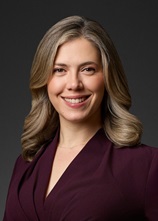
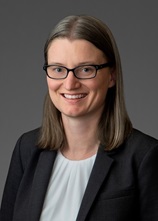
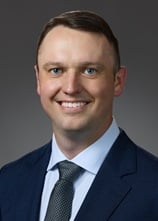
If you have any questions regarding this Sidley Update, please contact the Sidley lawyer with whom you usually work, or

Offices
Related Resources
Capabilities
Suggested News & Insights
- Stay Up To DateSubscribe to Sidley Publications
- Follow Sidley on Social MediaSocial Media Directory