
Announcements
Sidley Secures Major Victory for Western States Petroleum Association in High-Profile Environmental Challenge
Sidley secured a significant victory on behalf of the Western States Petroleum Association (WSPA) in a high-profile environmental challenge targeting the American refining industry. On June 25, 2026, Judge Michael W. Fitzgerald of the United States District Court for the Central District of California granted WSPA's motion to dismiss the First Amended Complaint, holding that plaintiffs lacked Article III standing and dismissing the case without reaching the merits.
The case arose from a citizen petition filed by Clean Air Council, Communities for a Better Environment, and the Natural Resources Defense Council under Section 21 of the Toxic Substances Control Act (TSCA) demanding that the U.S. Environmental Protection Agency (EPA) initiate a rulemaking under TSCA Section 6(a) to ban a chemical, hydrogen fluoride (HF), used by approximately 40% of U.S. petroleum refineries to make fuel — on the ground that it posed an unreasonable risk. After EPA denied the petition in May 2025, plaintiffs sued under Section 21 of TSCA to compel the agency to initiate a proceeding to ban HF, which risked numerous refinery closures across the country. WSPA intervened in support of the EPA, and both filed motions to dismiss. Sidley argued that the plaintiffs' alleged injuries depended on a chain of contingencies that was too speculative to support standing, and the court adopted that framing wholesale, holding that plaintiffs had not alleged a "credible threat" that a probabilistic harm would materialize, as required under the Ninth Circuit's standard in Natural Resources Defense Council v. U.S. EPA, 735 F.3d 873 (9th Cir. 2013). The court found that plaintiffs' allegations regarding aging refinery infrastructure, climate change, and safety record deficiencies were conclusory and insufficient to bridge the gap between possibility and plausibility under Article III. Because the court dismissed on standing grounds, it did not reach WSPA's and EPA's arguments for dismissal on the merits.
The court granted leave to amend but expressed skepticism that plaintiffs could replead to establish standing without substantially different allegations, noting that plaintiffs had already amended once and warning that any future successful motion to dismiss would be granted without leave to amend. The ruling is significant because Sidley secured an early win for the defense on a novel claim that had been difficult to defeat given TSCA Section 21’s unique requirement that federal judges engage in “de novo” review of EPA’s regulatory actions on chemicals.
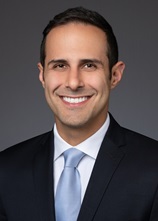
The Sidley team representing WSPA included Justin Savage, Nima Mohebbi, Brooklyn Hildebrandt, and Lauren DeCarlo.
連絡先



得意分野
Suggested News & Insights
- Stay Up To DateSubscribe to Sidley Publications
- Follow Sidley on Social MediaSocial Media Directory