
Supreme Court and Appellate Update
U.S. Supreme Court Clarifies In-State Connections Required for Specific Personal Jurisdiction
On March 25, 2021, the U.S. Supreme Court upheld state courts’ exercise of specific personal jurisdiction over automobile manufacturers in personal injury cases where that state’s residents assert claims relating to in-state accidents.
In two cases — Ford Motor Co. v. Montana Eighth Judicial District Court and Ford Motor Co. v. Bandemer — Ford was sued in Minnesota and Montana for injuries in those states suffered in accidents involving Ford vehicles bought on the used-vehicle market. The Supreme Court had previously held that a corporation is not subject to a lawsuit in states where it is not incorporated or headquartered unless the suit “arise[s] out of or relate[s] to the defendant’s contacts” with that state. Ford argued that personal jurisdiction was lacking because the specific vehicles in the accidents were not designed, manufactured, or originally sold in Minnesota or Montana, and Ford’s in-state business activity therefore did not cause the injuries.
The Supreme Court disagreed in an 8–0 decision (Justice Amy Coney Barrett did not participate) and affirmed the lower courts. The Court held that the standard “arises out of or relates to” permits the exercise of specific personal jurisdiction without a strict causal relationship in certain circumstances. Specifically, in Ford’s case, the Court held that “When a company like Ford serves a market for a product in a State and that product causes injury in the State to one of its residents, the State’s courts may entertain the resulting suit.” Nonetheless, the Court stressed that this ruling “does not mean anything goes. In the sphere of specific jurisdiction, the phrase ‘relate to’ incorporates real limits, as it must to adequately protect defendants foreign to a forum.”
The Court contrasted its decision with Bristol-Myers Squibb Co. v. Superior Court, a 2017 decision finding no personal jurisdiction in a California suit against a pharmaceutical manufacturer brought by “forum-shopping” patients who were not residents of or injured in California. The Court stressed that the Ford plaintiffs “brought suit in the most natural State” because they “are residents of the forum States. They used the allegedly defective products in the forum States. And they suffered injuries when those products malfunctioned in the forum States.” The Court also distinguished this case from a 1980 decision, World-Wide Volkswagen Corp. v. Woodson, which held that an automobile dealer could not be sued by a customer who bought a vehicle, drove to another state, and suffered an accident in that state. Unlike that automobile dealer, Ford has purposefully availed itself of the privilege of doing business in all 50 states and so could be subjected to jurisdiction in states whose citizens are involved in accidents using Ford vehicles there.
Three justices concurred in the judgment. Justice Samuel Alito would not have decided whether a causal relationship is required for specific personal jurisdiction and instead would have resolved the case on the ground that a causal relationship was adequately demonstrated, in that plaintiffs would not have bought used Ford vehicles in the forum states but for Ford’s heavy presence marketing and selling vehicles and parts in those states. Justice Alito further suggested that the Court’s personal jurisdiction jurisprudence is not “well suited for the way in which business is now conducted.” Justice Neil Gorsuch (joined by Justice Clarence Thomas) suggested that the personal jurisdiction framework dating back to International Shoe Co. v. Washington (1945) should be reexamined and is inconsistent with the original meaning of the Constitution. The two-Justice concurrence, observing what it viewed as “special jurisdictional protections in the name of the Constitution” for corporations, appears to suggest a return to a “presence” test, in which personal jurisdiction turns on the defendant’s physical presence in the forum state.
It is unclear how the Ford decision will apply outside of the context of automobile accidents. However, the decision suggests that the Court will give significant weight to the location of the injury and plaintiff’s residence, at least in cases in which the defendant also has significant operations in the forum state. Conversely, the decision reaffirms that “forum-shopping” plaintiffs who reside and were injured outside the forum state cannot support personal jurisdiction based on a defendant’s general operations in the forum state.
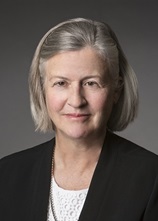
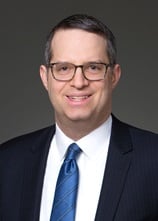
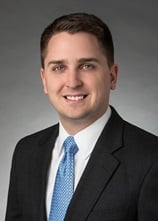
* Sidley attorneys Virginia Seitz, Jonathan Cohn, Erika Maley, Alan Rothman, and Daniel Hay represented Pharmaceutical Research and Manufacturers of America as amicus curiae in support of Ford in these cases.
弁護士広告—Sidley Austin LLP はグローバルな法律事務所です。当事務所の所在地および連絡先情報は、www.sidley.com/en/locations/offices に掲載されています。
Sidley は、本情報をクライアントおよび関係者の皆様へのサービスとして、教育目的のみに提供しています。本情報は、法的助言として解釈または依拠されるべきものではなく、また弁護士と依頼者の関係を生じさせるものでもありません。読者は、専門家の助言を求めることなく本情報に基づいて行動すべきではありません。Sidley および Sidley Austin とは、www.sidley.com/disclaimer に記載のとおり、Sidley Austin LLP およびその関連パートナーシップを指します。
© Sidley Austin LLP
お問い合わせ
この Sidley Update に関してご質問がある場合は、通常ご担当されている Sidley の弁護士、またはご連絡ください。
得意分野
Suggested News & Insights
- Stay Up To DateSubscribe to Sidley Publications
- Follow Sidley on Social MediaSocial Media Directory