
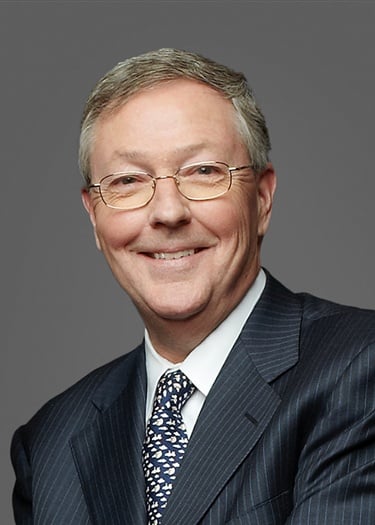
Carter G. Phillips
Crisis Management and Strategic Response
Biography
CARTER PHILLIPS is one of the most experienced Supreme Court and appellate lawyers in the country. As a partner at Sidley, Carter has argued 82 cases before the Supreme Court, more than any other lawyer in private practice. Prior to joining Sidley, Carter served as an Assistant to the Solicitor General and in that position he argued nine cases before the Supreme Court on behalf of the United States government. He thus currently has a total of 91 oral arguments before the Supreme Court. He also has argued more than 150 times before the United States Courts of Appeals, including at least two arguments in every circuit and 40 cases before the United States Court of Appeals for the Federal Circuit. He also has been a co-director of Northwestern University School of Law’s Supreme Court Clinic and an adjunct professor at the law school for almost 20 years. He was a “Distinguished Practitioner in Residence” at the Moritz College of Law at OSU in the Fall of 2023, 2024, and 2025. At the outset of his career, Carter clerked for Judge Robert Sprecher on the United States Court of Appeals for the Seventh Circuit and for Chief Justice Warren E. Burger on the United States Supreme Court.
In addition to his practice, Carter was the Chair of Sidley’s Executive Committee from 2012 through 2017. Before that he was the Managing Partner of Sidley Austin’s Washington, DC office from 1994-2012. He also was a member of the firm’s Management Committee and Executive Committee from 1994-2017. After he stepped down from management, he continued his full-time practice of law.
Carter’s advocacy on behalf of clients has earned him acknowledgement in numerous publications. An academic study of Supreme Court briefs from 1946 to 2013 found Carter to be one of the most successful lawyers to argue in front of the Supreme Court. The analysis, “Who Wins in the Supreme Court? An Examination of Attorney and Law Firm Influence,” led the author to conclude that “not only is Phillips a seasoned Supreme Court litigator, but he is also one of the most successful Supreme Court brief-writers.”
In recognition of Carter’s litigation success, he has been ranked among the nation’s top lawyers by Chambers USA, Legal 500 United States, Benchmark Litigation, The Best Lawyers in America®, Who’s Who Legal, and the National Law Journal. He consistently is recognized by Chambers USA as being in the nation’s top tier of appellate lawyers and regularly receives the directory’s highest level “Star” ranking. That publication said that Carter is “one of the leading lights of the appellate Bar, described as ‘a truly unique talent’ whose incredible expertise sees him appear frequently before the Supreme Court.” Over the years, sources have told Chambers that he is “in a league of his own” with “a CV that stretches from the U.S. to London,” noting especially that he “enjoys a lot of credibility with the Supreme Court and has an amazing track record,” and that “there’s nobody quite like him on an appellate issue.” Benchmark Litigation also named Carter a “Litigation Star,” calling him “a household name” in the appellate world (2022–2025).
In 2025, Carter was honored with the “Lifetime Achievement” award by The National Law Journal. In 2024, Carter was named to Forbes’ inaugural “America’s Top 200 Lawyers” list and in 2025 he was named in Forbes’ inaugural “Best-In-State” for the District of Columbia. In August 2022, Carter was honored by The American Lawyer with the “Lifetime Achievement Award.” The prestigious award honors “an esteemed group of seasoned lawyers, recognizing the indelible mark they’ve left on the legal profession.” In May 2020, Law.com named Carter a “Litigator of the Week” for his contribution in the historic win in the Detroit Public School literacy case that he argued in the Sixth Circuit. In 2015, Carter was named to The National Law Journal’s list of Litigation Trailblazers. In Legal 500, he is recommended as a “Leading Lawyer,” and in 2017 was added to its “Hall of Fame.” Carter was named to the 2013 National Law Journal list of “The 100 Most Influential Lawyers in America.” Most recently, Carter was selected by his peers as the 2024 top “Lawyer of the Year” in Media Law and Bet-the-Company Litigation in Washington, D.C. Additionally, he was featured in the 33rd edition of The Best Lawyers in America® for his exceptional work in Litigation – First Amendment Law and First Amendment Law, Appellate Practice, Commercial Litigation, Bet-the-Company Litigation, Media Law, Litigation – First Amendment, Litigation – Regulatory Enforcement (SEC, Telecom, Energy), and Litigation – Patent.
Every year since 2013, Washingtonian magazine has recognized Carter to its list of Washington’s “Top Lawyers” as one of the region’s “best legal minds” for his Supreme Court practice, and he was named to its “Top Lawyers Hall of Fame” (2022). He has been listed in the top 10 among Super Lawyers magazine’s Top 100 lawyers in Washington, from 2007–2023, based on a vote of peers. Carter was honored as one of “The Decade’s Most Influential Lawyers” in 2010 by The National Law Journal. Recognized as one of the lawyers who has “defined a decade” with “a reputation as the point man for high-level appellate cases.” Carter was noted in the Journal for his successful representation of clients in the Supreme Court, and his pro bono and other appellate representations. A year earlier, he was named one of the “90 Greatest Washington Lawyers of the Last 30 Years” by the Legal Times.
Carter’s alma mater, Northwestern University, honored him by creating the Carter G. Phillips Center for Supreme Court and Appellate Advocacy in 2024. The University also renamed its Supreme Court Clinic: the Carter G. Phillips/Sidley Austin LLP Supreme Court Clinic in his honor and to recognize Sidley’s support for the Clinic over the past 20 years.
Carter’s practice has been featured in articles in Forbes, the American Lawyer, Business Week, Legal Times, The National Law Journal, USA Today, and Legal Business (a publication in England). He frequently speaks at conferences, law schools and before industry groups regarding his experience before the Supreme Court.
Experience
Representative Matters
Representative cases in the Supreme Court include:
- Devas Multimedia Private Limited v. Antrix Corp. Ltd., et al., Nos. 24-17 and 23-1201, whether plaintiffs must prove minimum contacts before federal courts may assert personal jurisdiction over foreign state-owned entities sued to enforce an arbitration award under the Foreign Sovereign Immunities Act.
- U.S., Ex Rel. Tracy Schutte, et al., v. SuperValu Inc., et al, Nos. 21-1326 and 22-111, whether and when a defendant’s contemporaneous subjective understanding or beliefs about the lawfulness of its conduct are relevant to whether it “knowingly” violated the False Claims Act.
- Mallory v. Norfolk Southern, No. 21-1168, whether the due process clause prohibits a state from exercising jurisdiction over litigation between a plaintiff, who is a non-resident of the state, suing a corporation, which also is a non-resident of that state, on a cause of action that did not arise in that state solely because the corporation has registered to do business in the state.
- CITGO Asphalt Refining Co. v. Frescati Shipping Co., No. 18-565 (March 30, 2020), which addresses whether in an admiralty case, a “safe berth” clause in a contract to ship oil constitutes a warranty that the ship will arrive safely or merely an assurance to act reasonably in selecting the destination port.
- PDR Network v. Carlton & Harris Chiropractic, 139 S. Ct. 2051 (June 20, 2019), which addresses whether the Hobbs Act required the district court in this case to accept the FCC's legal interpretation of the Telephone Consumer Protection Act.
- Tennessee Wine and Spirits Retailers Association v. Blair, 139 S. Ct. 2449 (June 26, 2019), which addresses whether the Twenty-First Amendment empowers states, notwithstanding the dormant Commerce Clause, to discriminate against out-of-state retailers of liquor by requiring them to reside in-state for a specified time.
- Animal Science Products v. Hebei Welcome Pharmaceutical Company, 138 S. Ct. 1865 (June 14, 2018), arguing for the Ministry of Commerce of the People’s Republic of China as amicus curiae, which involved whether and under what circumstances a United States court is “bound to defer” as a matter of international comity to a foreign government’s formal statement of its own law.
- Life Technologies Corp. v. Promega Corp., 137 S. Ct. 734 (Feb. 22, 2017), which involved whether the Federal Circuit erred in holding that supplying a single, commodity component of a multi-component invention from the United States is an infringing act under 35 U.S.C.§ 271(f)(1), exposing the manufacturer to liability for all worldwide sales.
- FERC v. Electric Power Supply Association, et al., 136 S. Ct. 760 (Jan. 25, 2016), which involved the Federal Energy Regulatory Commission’s (FERC) authority to regulate the compensation that regional transmission operators pay for demand response services.
- Teva Pharmaceuticals USA, Inc. v. Sandoz, Inc., 135 S. Ct. 831 (Jan. 25, 2015) , which involved the question of whether a district court’s factual finding in support of its construction of a patent claim term should be reviewed de novo, as the Federal Circuit requires, or for clear error.
- Alice Corporation PTY. LTD. v. CLS Bank International, 134 S. Ct. 2347 (June 19, 2014), which determined whether claims to computer-implemented inventions — including claims to systems and machines, processes and items of manufacture — are directed to patent-eligible subject matter within the meaning of 35 U.S.C. § 101 as interpreted by the Supreme Court.
- Octane Fitness v. Icon Health & Fitness, 134 S. Ct. 1749 (April 29, 2014), in which the Court determined whether the “exceptional case” requirement in 35 U.S.C. § 285, requires that the losing party have both an objective and a subjective belief that the case lacked merit.
- Ken Salazar v. Ramah Navajo Chapter, 132 S. Ct. 2181 (June 18, 2012), in which the Court determined that the government is required to pay all of the contract support costs incurred by tribal contractors under the Indian Self-Determination and Education Assistance Act, 25 U.S.C. 450 et seq., even though Congress imposed an express statutory cap on the appropriations available to pay all such costs to all Tribes and the Secretary was unable to pay the full costs for each tribal contractor without exceeding the aggregate statutory cap.
- Federal Communications Commission v. Fox Television Stations, 132 S. Ct. 2307 (June 21, 2012), in which the Court held that because the Commission failed to give Fox or ABC fair notice prior to the broadcasts in question that fleeting expletives and momentary nudity could be found actionably indecent, the Commission’s standards as applied to these broadcasts were unconstitutionally vague.
Carter is acknowledged as one of the leading appellate lawyers in the United States, having handled cases at all levels of state and federal court systems. His representative cases in the federal courts include:
- In Re: TransCare Corporation,No. 21-2576 (2nd Cir. 2022) (bankruptcy)
- SpeedTrack, Inc. v. Amazon.com, Inc., No. 20-1573 (Fed. Cir. 2021) (patent)
- San Antonio Bay Estuarine v. Formosa Plastics, No. 20-40575 (5th Cir. 2021) (Clean Water Act)
- Gary B. v. Gretchen Whitmer, No. 18-1855/18-1871 (6th Cir. 2019) (right of access to literacy)
- Amazon.com Inc. v. Commissioner of Internal Revenue, 934 F.3d 976 (9th Cir. 2019) (tax case involving transfer pricing)
- Prism Technologies LLC v. Sprint Spectrum L.P., 757 F. App'x 980 (Fed. Cir. 2019) (patent infringement)
- John Teets v. Great-West Life & Annuity Insurance Company, 21 F. 3d 1200 (10th Cir. 2019) (ERISA)
- In re: Rail Freight Fuel Surcharge, 934 F. 3d 619 (D.C. Cir. 2019) (antitrust class action)
- William Pender v. Bank of America, 736 F. App'x 359 (4th Cir. 2018) (ERISA)
- In Re: Vitamin C Antitrust Litigation, 837 F. 3d 175 (2nd Cir. 2016) (international comity)
- Microsoft Corporation v. Motorola, 696 F. 3d 872 (9th Cir. 2012) (licensing infringement)
- Commercial Union v. Swiss Reinsurance America Corp., 413 F. 3d 121 (1st Cir. 2005) (reinsurance dispute)
- Henry Lee Pickett v. Tyson Fresh Meats, Inc., 420 F. 3d 1272 (11th Cir. 2005) (Packers and Stockyards Act claim dismissal)
- Hartmarx Corp. v. Abboud, 326 F.3d 862 (7th Cir. 2003) (successful challenge to sanctions order)
- Alverez – Machain v. United States, 331 F.3d 604 (9th Cir. 2003) (en banc) (proper interpretation of the Alien Tort Statute)
Community Involvement
Membership & Activities
Carter is a member of the American Law Institute, the American Academy of Arts and Sciences and the American Academy of Appellate Lawyers. He is a Fellow of the American College of Trial Lawyers and of the American Bar Foundation. He is the newly elected President of the Supreme Court Historical Society, the immediate past Chair of the Federal Circuit Advisory Council, and formerly served on the Board of Governors of the Federal Circuit Bar Association. He also serves on the Board of Directors of the National Chamber Litigation Center, the public policy law firm of the U.S. Chamber of Commerce. Carter received the 2014 Distinguished Alumni Award from Northwestern Law School. He received the Honorary Degree, Doctor of Public Service, from The Ohio State University in 2011, and the Ohio State Alumni Professional Achievement Award in 2007. Also in 2007, Carter received the Lewis F. Powell Award for Business Advocacy given by the National Chamber Litigation Center. Before that, he received Northwestern University’s Alumni Award in 2006, and its Alumni Merit Award in 1998. Carter also received the Rex Lee Advocacy Award from the J. Reuben Clark Society in 2001. He is the Vice Chair of the Ohio State University Foundation Board of Trustees, and a member of the Advisory Committee of The Ohio State University College of Arts and Sciences.
Pro Bono
A victory in the Sixth Circuit on behalf of Detroit school children in Gary B. v. Whitmer helped Sidley earn the 2019 Public Counsel Pro Bono Award. Carter argued the case, which involved a formidable team of Sidley lawyers and outside counsel, and the Court held that schoolchildren have a fundamental right of access to literacy under the Due Process Clause of the Fourteenth Amendment to the U.S. Constitution.
Carter has briefed and argued numerous other pro bono appeals in state and federal courts of appeals. He and co-counsel prevailed twice in Fifth Avenue Presbyterian Church v. City of New York, in which the Second Circuit held that the Church’s practice of allowing homeless individuals to take refuge on Church property is part of a sincerely held religious belief protected by the First Amendment of the U.S. Constitution. Among Carter’s pro bono cases are many he argued before the Supreme Court. They include Douglas v. Independent Living Center of Southern California, which determined whether Medicaid providers may maintain a cause of action directly under the Supremacy Clause to enforce protections provided by 42 USC § 1396a(a)(30)(A) by asserting that the federal statute preempts a state law that reduced reimbursement rates.
Carter has a long history of participation in civic and philanthropic endeavors. He is an adjunct professor at Northwestern University School of Law, as well as a member (and former chair) of the Dean’s Advisory Committee and Carter is co-director of the Law School’s Carter G. Phillips/Sidley Austin LLP Supreme Court Clinic. Since 2006, Sidley has sponsored the clinic, which primarily represents indigent criminal defendants. Clinic students draft briefs and identify court of appeals’ decisions as candidates for petitions for a writ of certiorari, all in partnership with the firm’s pro bono program. Carter also regularly participates in events organized by the DC Bar Foundation, including one in 2012 that benefited the Foundation’s Loan Repayment Assistance Program (LRAP). LRAP helps D.C. poverty lawyers pay their educational debts while earning a public interest salary, essentially increasing the compensation of the attorneys serving Washington, D.C.’s most vulnerable residents.
Credentials
- U.S. Supreme Court
- U.S. Court of Appeals, 1st Circuit
- 美国第二巡回上诉法院
- U.S. Court of Appeals, 3rd Circuit
- 美国第四巡回上诉法院
- U.S. Court of Appeals, 5th Circuit
- U.S. Court of Appeals, 6th Circuit
- 美国第七巡回上诉法院
- U.S. Court of Appeals, 8th Circuit
- U.S. Court of Appeals, 9th Circuit
- U.S. Court of Appeals, 10th Circuit
- U.S. Court of Appeals, 11th Circuit
- U.S. Court of Appeals, D.C. Circuit
- 美国联邦巡回上诉法院
- U.S. District Court, District of Columbia
- 美国华府哥伦比亚特区
- 美国伊利诺州
- 西北大学法学院, 法学博士, 1977, magna cum laude, Order of the Coif
- Northwestern University, 文学硕士, 1975
- 美国俄亥俄州立大学, 文学学士, 1973, summa cum laude, Phi Beta Kappa
- Warren E. Burger, United States Supreme Court (1978-1979)
- Robert Sprecher, 美国第七巡回上诉法院 (1977-1978)